The Vanishing Artist (Before AI Even Arrived)
by Nina Sanadze

Art eras are only named after they’ve passed. Historians wait for distance, for clarity, before assigning meaning. No one living through the Renaissance called it that. The names come later, once the dust settles.
Still, we try to name our own time. An educated guess is worthwhile, even if wrong. It has become clear to me that we live in the era of Imposter Art, where the figure of the artist is in question.
Art history often advances through rupture: from prehistoric ritual image-making to the symbolic systems of medieval art; from Renaissance naturalism to the fragmentation of Cubism. Dada disrupted modern art from within. Postmodernism challenged the idea that art progresses or carries a single meaning. Conceptual art shifted attention from object to idea.
But conceptual art did not eliminate the artist. At its best, think Kosuth or LeWitt, it demanded more. The object receded, but the mind became sharper, more exacting. The artist remained essential.
There is a clear trajectory in art history: first, the pursuit of perfect perspective and lifelike representation; then, once mastered, deliberate deconstruction. The more inventive and original your method of deconstruction, the more significant you become, marking a new stage in art and perception.
Eventually, this process reached an extreme. I recall seeing Voids: A Retrospective at the Centre Pompidou in Paris in 2009: a series of empty white rooms presented as artworks, a retrospective of “nothing.” It seemed like an endpoint.
And yet, since around 2009, something new has emerged. The logic persists, art must constantly reinvent itself, but the shift has become more radical. What followed was not just the loss of craft or object, but the gradual removal of the artist altogether.
Today, you no longer need to be an artist to be called one.
You need to occupy the position of “artist” and speak the right language.
I love contemporary art. I am not interested in defending tradition for its own sake or lamenting the loss of skill. I welcome ideas. I welcome the new. But what unsettles me is not evolution; it is substitution.
As both artwork and artist dissolve along this trajectory, a void is created, and something must fill it. And what replaces the artist is, increasingly, an imposter.
Let’s not soften this: aesthetic judgment has been replaced by ideological frameworks.
What matters is not whether something is powerful, necessary, or new, but whether it signals the correct beliefs. In this sense, many of these figures resemble political and cultural preachers more than artists. What counts is no longer the work itself, but the context surrounding it and fluency in the system.
The central figures of the art world are no longer defined by artistic practice, but by institutional roles. They circulate through galleries, biennales, funding bodies, and universities. They set trends, distribute opportunities, and shape discourse, rarely challenged.
From this, a new class has emerged, one that does not merely sideline artists but systematically replaces them.
Not because they lack talent but because independence has become a liability. To think differently, refuse alignment, or remain faithful to one’s own vision now comes at a cost. Quiet hostility toward artists is normalised. If you do not fit, you are simply excluded.
Many artists withdraw. They work in private or elsewhere. Or they stop altogether. They leave a system that no longer sees them.
Many will remain unknown. Their work is unseen. Their worlds unrealised. And most people will not even register the loss. This is not an art world full of artists.
What remains is something uncanny. An art world in which the title remains while its meaning dissolves. This is what I mean by impostors. A landscape of convincing replicas, figures who speak and move like artists yet are shaped by systems rather than driven by necessity and substance. Work continues to be produced, circulated, and validated, but the presence of an actual artist has become optional. At first, the difference might seem subtle. Then something feels off.
That feeling is real. You really are being fooled. What’s missing is not only skill or talent. It is the independent, searching, irreducible mind that makes art possible. True artists resist containment. They do not produce on demand. They do not follow but diverge.
They create because they must. Because something in them insists on seeing differently and on making that difference visible. That force, that necessity, is what is fading. And it matters.
Art is not decoration. It shapes culture, language, and perception. It determines how we encounter reality itself. The disappearance of the artist is not a minor cultural shift; it is a civilisational one.
When the artist disappears, we lose not a profession but a way of seeing, feeling, and understanding, the very capacity to empathise and recognise truth.
Without artists, even freedom of expression loses substance because there is no one left to exercise it meaningfully.
You might think we have bigger problems to solve—environmental collapse, wars, the economy, poverty… the list goes on. If the artist becomes an imposter, the world follows. Not all at once, but gradually, until everything looks convincing and nothing feels true.
So, what happens when artists disappear?
What kind of world remains without art that transforms you, without music that unsettles or moves you, without images that alter perception, without forms that express what language cannot?
The world does not become empty; it becomes saturated yet strangely meaningless, flat, repetitive, and performing significance without ever producing it.
You can already sense it. Imposter art does not merely appear hollow; it is hollow. More than that, it is unsettling. It carries the quality of something imitating life without possessing it.
It resembles art. But it does not breathe.
And this did not arrive suddenly. It was deliberately built through systems that ceased to recognise talent, ceased to reward vision, and instead selected for compliance with their agendas. As this took hold, artists with something difficult, irreducible, alive were pushed to the margins or disappeared entirely.
When a system no longer requires artists, what replaces them is not more art, but its imitation. Enabled by institutions, by a culture that gradually privileged politics over truth, identity over talent, representation over creation, compliance over risk.
A culture that learned to manage and trade art, rather than value it.
The result is not merely a shift within the art world; it is a diminishment of reality itself. A directional change for humanity.
Because when a generation grows up without encounters with real art, without work that challenges, unsettles, and expands, they inherit less, without ever knowing there was more.
They inhabit a void they can feel but cannot name. A world like music heard through walls, a forest that holds no echo, food that fills you but has no taste.
So do not blame what comes next solely on technology. Do not place the burden on AI as if it were the origin of this emptiness. The conditions were set long before. This is not rupture but continuation. When AI fully arrives, there will be nothing left to dismantle. It will enter a space that is already empty.
A world without artists is not a future scenario. It is already here. You feel it in the absence of depth, risk, or anything that truly lingers. The loss is already underway, not only of individuals, but of what made art matter in the first place.
If this were happening in medicine, the danger would be immediately understood. If hospitals were filled with impostors, people holding the title of doctor without the knowledge, discipline, or responsibility, the consequences would be intolerable. Lives would be at risk.
Yet in art, we fail to recognise a parallel collapse. We treat it as abstract, optional, even harmless. It is not.
If you feel disoriented by what is happening in the art world, trust that instinct.
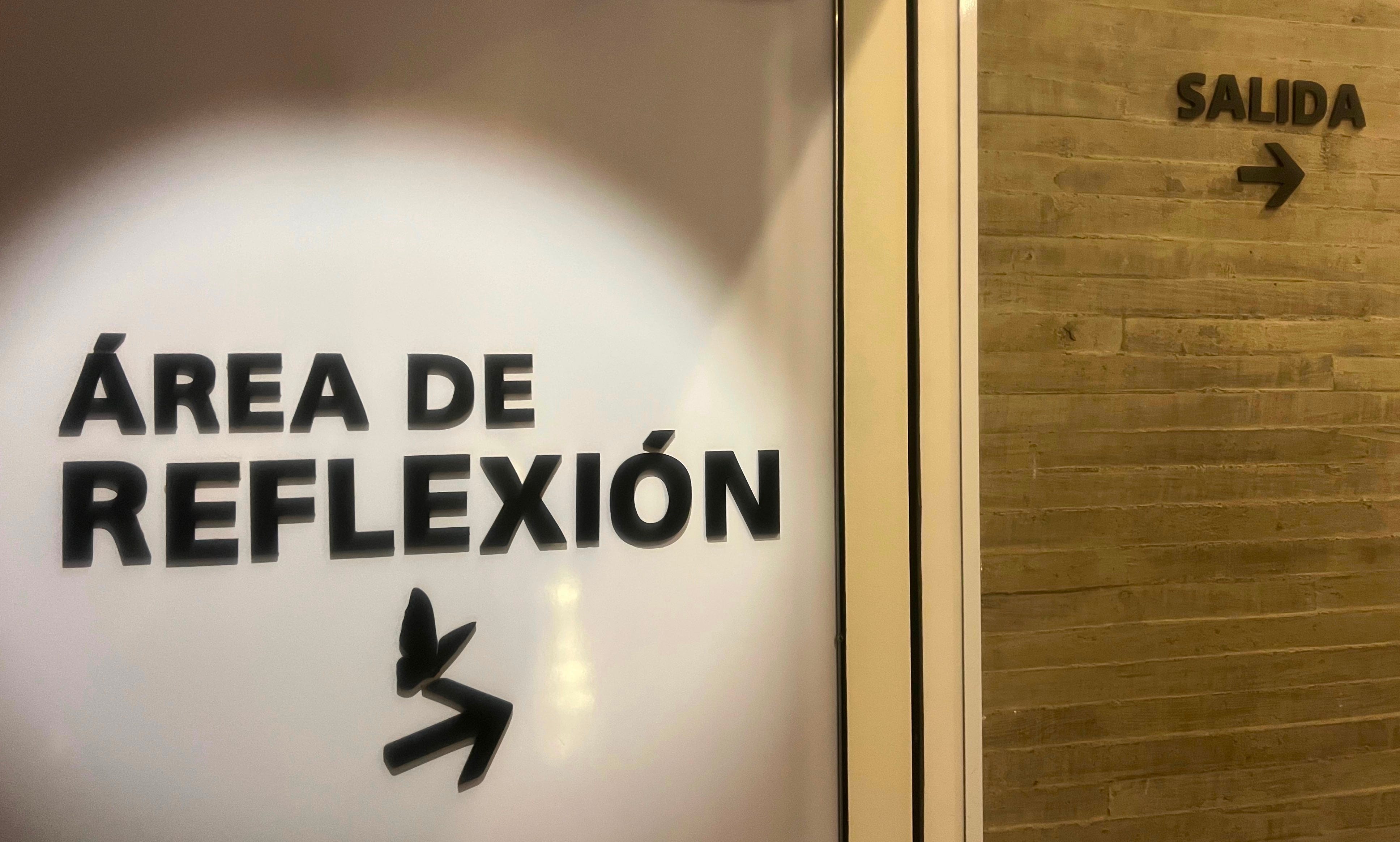
The artists have already left the building.
Perhaps it is too early to name an era while we are still inside it. But there is urgency now. Too much is at stake to wait for historical distance.
To name this moment, even imperfectly, is to confront it. To confront it is to recognise what is being lost. And recognition is the first and perhaps only step toward change.